Cholesterol is a waxy, fat-like substance that your body needs to build cells and make some hormones and vitamin D. Your liver makes most of what you need; the rest comes from food. Problems start when there is too much of certain types in your blood, because they can build up inside artery walls and narrow them over time. That process (atherosclerosis) is the underlying cause of most heart attacks and strokes.
Your results usually show four or five numbers, all measured in millimoles per litre (mmol/L) in the UK.
Total cholesterol is the sum of all the cholesterol in your blood. NHS guidance is that a healthy total is 5 mmol/L or below for healthy adults, and 4 mmol/L or below if you are at higher risk (for example, if you have already had a heart attack or stroke).
LDL cholesterol (low-density lipoprotein) is sometimes called 'bad' cholesterol because it is the type that builds up on artery walls. NHS guidance suggests aiming for 3 mmol/L or below for healthy adults, and 2 mmol/L or below if you are at higher risk.
Non-HDL cholesterol is total cholesterol minus HDL. Many UK labs now report this instead of, or alongside, LDL because it captures all the 'bad' types of cholesterol in one number. The NHS target is 4 mmol/L or below for healthy adults and 2.5 mmol/L or below if you are at higher risk.
HDL cholesterol (high-density lipoprotein) is the 'good' type. It helps carry cholesterol away from your arteries to your liver, where it is broken down. Higher is generally better. The NHS uses 1 mmol/L or above for men and 1.2 mmol/L or above for women as healthy. Very high HDL (above about 2.3 mmol/L) does not give extra benefit and may not be protective.
Triglycerides are another type of fat in your blood. They mostly come from food, especially sugary foods and alcohol, and from extra calories your body has not used. A fasting result under 1.7 mmol/L is generally considered healthy.
Your TC:HDL ratio (total cholesterol divided by HDL) is sometimes reported as well. A ratio under 4 is generally considered healthy, and under 3 is even better.
If your numbers are not where you want them, the levers are familiar and well-evidenced: less saturated fat (fatty cuts of meat, butter, cream, palm oil, many baked goods) and more unsaturated fat (olive and rapeseed oils, oily fish, nuts, seeds and avocado); more soluble fibre from oats, beans, lentils, fruit and vegetables; regular activity (the NHS recommends at least 150 minutes of moderate activity a week); not smoking; and keeping alcohol within the UK guideline of no more than 14 units a week.
Statins are also a well-established treatment that can lower LDL cholesterol substantially, and they are usually offered if your estimated 10-year risk of heart disease or stroke (your QRISK score) is 10% or higher. Talk it through with your GP rather than relying on what you read online: the right plan depends on your full risk picture, not just one number on a report.
Keep reading

Press release
Gary Marshall, The Rayleigh Club Captain, selects The Mitchy Foundation as his chosen charity
Gary Marshall chose The Mitchy Foundation as the official charity of his year as Club Captain at The Rayleigh Club, raising £3,009.20 across a packed calendar of fundraising on and off the course.
Fundraising
The boys complete the Barcelona Marathon, raising £4,000 in the process
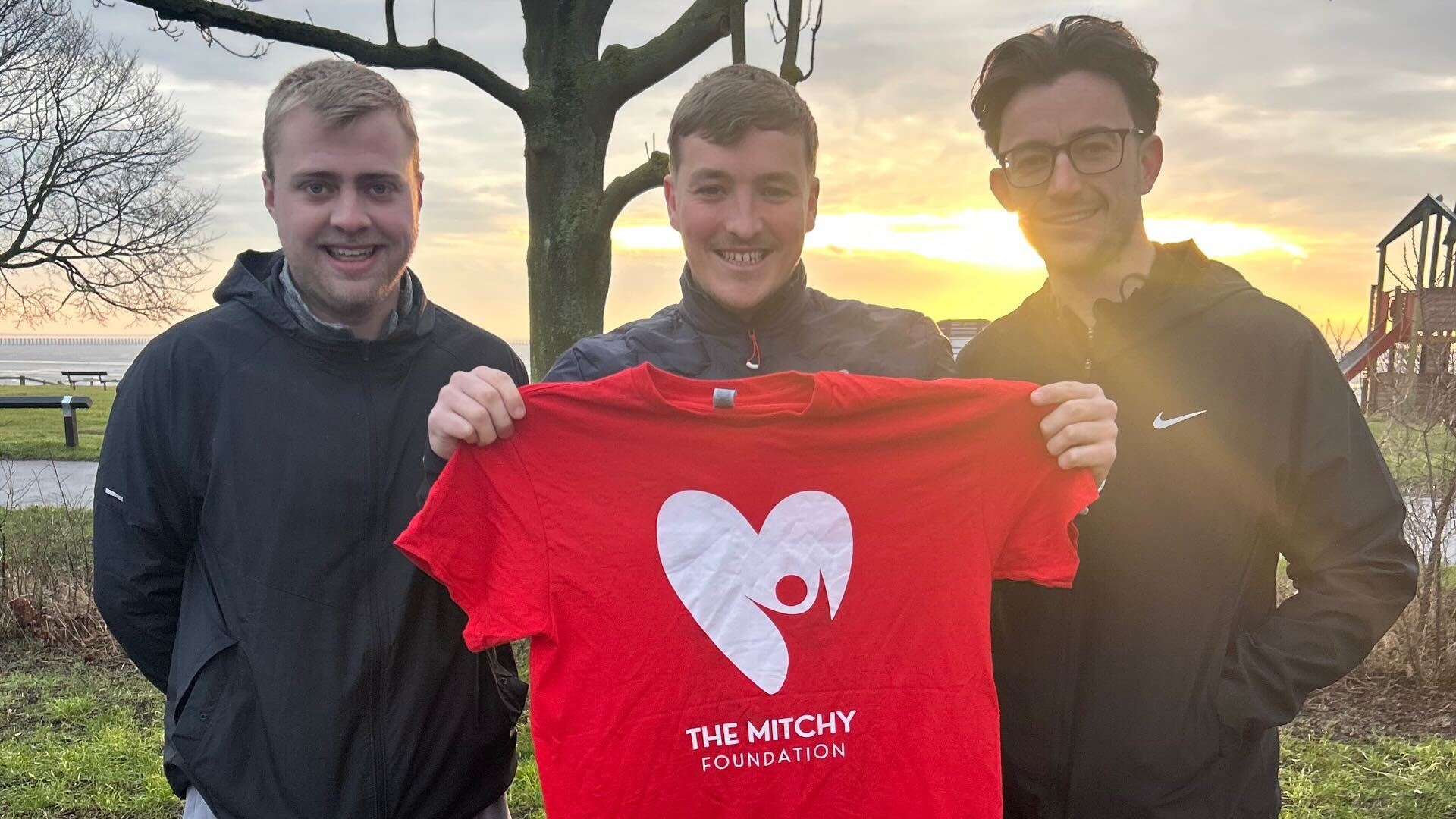
Alfie Fuller, Adam McDonnell and Harry Mole, longtime fundraisers for the charity, set out once again on a new endeavour to support the foundation by running the 2026 Barcelona Marathon in memory of Mitchy, raising £4,000 across the 26.2 mile course.